iPhone as infinite music generator

Many years ago I discovered Brian Eno’s ambient music through vinyl LP releases like Discreet Music, Music for Airports, and others. The generative aspects of these pieces were appealing to me, and I found the results to be quite beautiful. The only weakness in the pieces, for me, was the limitation of appearing on vinyl albums in short segments. I wanted the pieces to play uninterupted for much longer.

In the mid-eighties, the introduction of the compact disc provided an option that supported longer playing times, and Eno took advantage of that with Thursday Afternoon, a CD-specific version of music he had composed for a video project. That was a CD that I repeatedly played for hours at a stretch while I worked on various design projects. (More recently, the videos from the series have been released on DVD.)

Skipping ahead to the current millennium, last year Eno collaborated with Peter Chilvers to create Bloom, an iPhone app that provides an essentially infinite number of possibilities for ambient pieces. Bloom relies on the computer at the heart of the iPhone to generate music based on minimal input from the user/creator/listener. The results are wonderful, though I did notice that Bloom runs the battery down more quickly than simply listening to Thursday Afternoon does, for obvious reasons. Bloom feels like the ultimate realization of the promise of Eno’s earlier ambient pieces, and has the great advantage of working on a mobile device. As an aside, I think Bloom was the second app that I bought for my iPhone.

Recently I discovered that there was an update to Bloom available. I downloaded it right away, and discovered a few enhancements to the app. More intriguingly were the links to two new apps with a similar heritage: Trope, by Eno and Chilvers again, and Air, by Chilvers and Sandra O’Neil. I’ve bought both, as they are ridiculously inexpensive, and am slowly working my way through them.

What is that I find so striking about these apps? First, as I’ve already written, they seem to deliver on what has in the past felt to me like the unrealized potential of Eno’s generative music. Second, they play to the gestural strengths of the iPhone user experience to deliver a simple application that anyone can use to make music in collaboration with the creators of the apps. Finally, the simple update to Bloom provided a great way to let me know about the newly available Trope and Air.

A lot has been written in recent years, by more thoughtful observers than me, on the state of the music industry and its struggles with new technologies. These three apps feel to me like one way to address a new technology head on and create something new and vital in the process.

Learn about personas at the next UX Group meeting

This month’s UX Group of Waterloo Region meeting is on Thursday October 15 and features a special treat. My Primal Fusion colleague Robert Barlow-Busch will be doing a presentation on personas. Bob will draw upon his own ‘stories from the trenches’ to help you to understand how to get the best from this product design tool. Come on out and enjoy the learning opportunity, and meet other folks in Waterloo Region’s thriving UX community.

Thanks for Oktoberfest

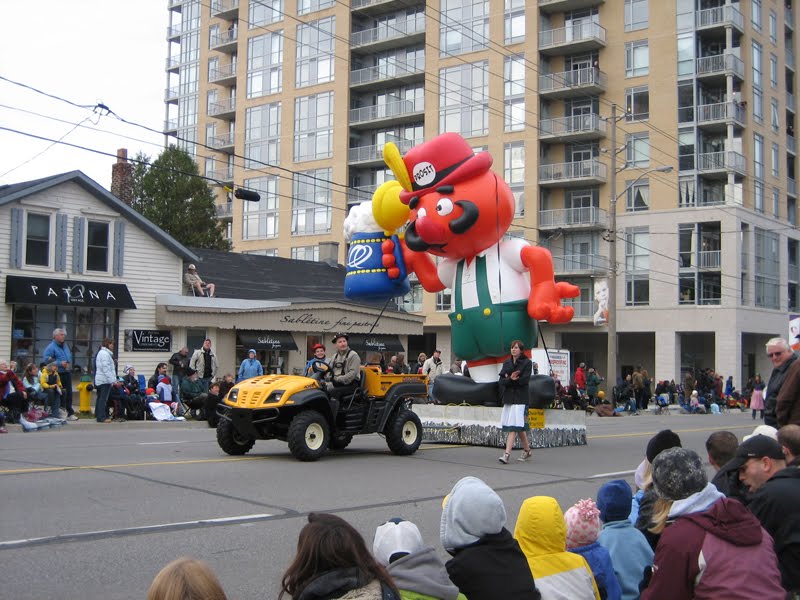
A large inflateable Onkel Hans at the Oktoberfest Parade

Well, it’s that time of year again here in Kitchener-Waterloo. Oktoberfest is a long-running Bavarian festival that celebrates the region’s German heritage. While beer is certainly a well-known part of that heritage and the festival, there’s much more to celebrate than fine German lagers. I have to confess, though, that it wasn’t until I had kids that I took in more events and enjoyed the celebration. My family and I enjoyed two of those events over this Thanksgiving weekend.

Saturday morning was the Oktoberfest Pancake Breakfast at the public square in Uptown Waterloo. The volunteers and organizers do a terrific job preparing and serving breakfast for hundreds of people in a fast and efficient way. My sons and I made sure to drop off our contributions to the Food Bank of Waterloo Region.

Monday morning we took in the Oktoberfest parade. We’re particularly lucky because the parade route passes by only a block from our home. My kids look forward to this every year, even when there’s rain pouring down. Happily, this year’s edition was free of rain, if more than a little chilly.

Primal Fusion sponsors Cory Doctorow at the Quantum To Cosmos Festival

I mentioned the Quantum To Cosmos Festival some time ago when it was first announced. I’m lucky enough to have secured tickets to a few events and I’m looking forward to taking them in.

More exciting for me is the news that Primal Fusion is sponsoring one of the events. Cory Doctorow will be speaking on Thursday October 22 at 4:00pm on the subject Copyright versus Universal Access to All Human Knowledge and Groups Without Cost: the state of play in the global copyfight.

We’re so excited at Primal Fusion, in fact, that our founder Peter Sweeney’s most recent blog post, Want to Build a Better Internet? Stop Searching for Solutions, takes a cue from an article that Doctorow wrote earlier in the summer. Have a look, and then let Pete know what you think. Is he on to something big? Is he way off-base? Is he somewhere else?

If you’re not able to get to Doctorow’s festival presentation in person, keep in mind that Q2C will be streaming events live over the Internet. Check it out and set aside some time to drink from the metaphorical cup of learning offered by Quantum to Cosmos.

Raising and lowering the volume on an iPhone

I’m an iPhone owner and I think it’s a pretty amazing device. It’s not perfect, of course, but I’m generally happy to live within the bounds of its constraints and take advantage of its strengths. Any device that breaks new ground, though, is bound to have its own idiosyncrasies. Here’s one on the iPhone that’s more amusing than annoying for me, but it does occasionally trip me up.

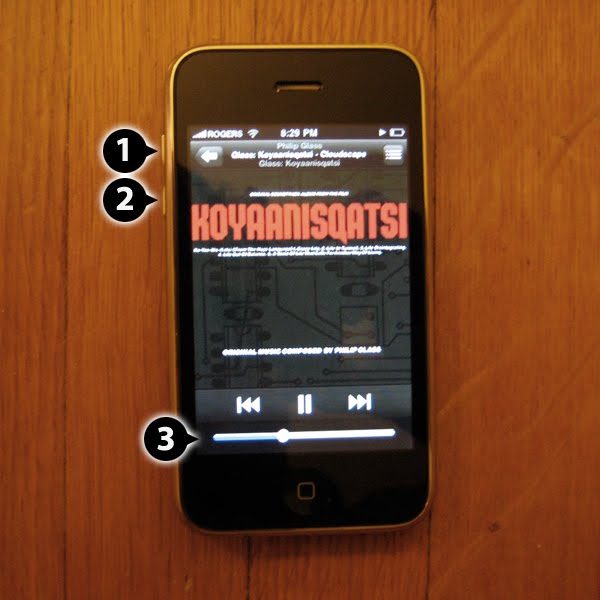
An iPhone in vertical orientation, showing controls

The iPhone includes a hardware-based volume control in the form of a pair of buttons. When viewed in vertical orientation, the buttons are at the top of the left edge of the device. Pressing the higher button (1) makes the volume go up, or higher. Pressing the lower button (2) makes the volume go down, or lower. So far, pretty straightforward. There’s a clear mapping between the buttons and their effect on the volume

There’s a little twist introduced when in the iPod app. There is also a volume control in the form of a slider on the touchscreen (3). Dragging the slider to the right raises the volume and dragging it to the left lowers the volume. Pressing the volume buttons will move the slider too. The slider is is oriented perpendicularly to the hardware buttons, but it works.

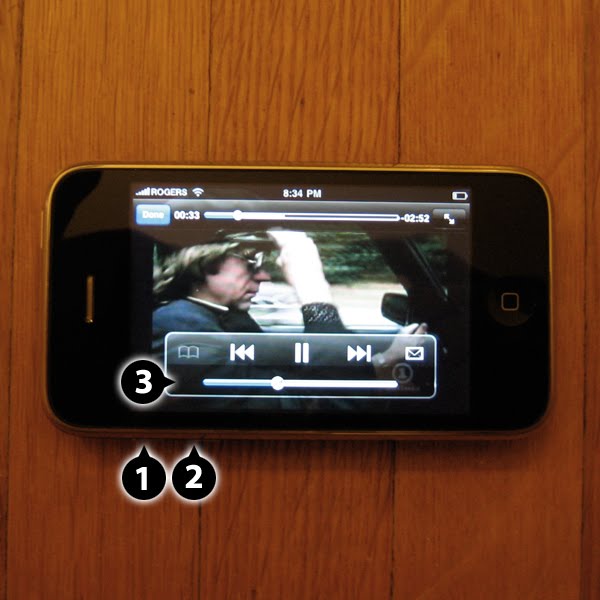
An iPhone in horizontal orientation, showing controls

Things get more interesting when viewing the iPhone in horizontal orientation. The two hardware buttons are now at the left side of the bottom edge of the device. Pressing the left button (1) makes the volume go up, or higher. Pressing the right button (2) makes the volume go down, or lower.

Here’s where things get most interesting. In the YouTube app there is a volume slider (3) that is identical in functionality to the one in the iPod app. That is, dragging the slider to the right raises the volume and dragging it to the left lowers the volume. So far, so good. Pressing the volume buttons will still move the slider too, but with counter-intuitive results. Pressing the left button moved the slider to the right, raising the volume. Pressing the right button moved the slider to the left, lowering the volume.

One could make the case that the slider and the hardware controls are behaving consistently regardless of orientation, which is true. The trouble is that the consistent behaviour leads to an unexpected result when the iPhone is in horizontal orientation. In the end, though, it might not matter much, since it’s only a problem when the slider is visible on screen. The YouTube app usually hides the controls, and the hardware control obviously works without the slider being visible. Still, it’s an interesting quirk.

DemoCampGuelph11 coming up on Wednesday

The next DemoCampGuelph event is at 6:30pm on Wednesday September 30 at The Ebar in Guelph. As it says on the description:

Anyone in and around Guelph interested in software, the web and technology! Startup junkies, wage slaves, consultants, students, indie professionals, engineers, designers, money and marketing guys. If you want to see and talk about some interesting things, and get to know other people in the Guelph tech community, come on out! You don’t have to demo to attend.

Sound interesting? Of course it does! Get signed up and get to the Ebar. Beer and software demos make for an event that’s just too good to miss.

IDEA2009 is in the rear view mirror

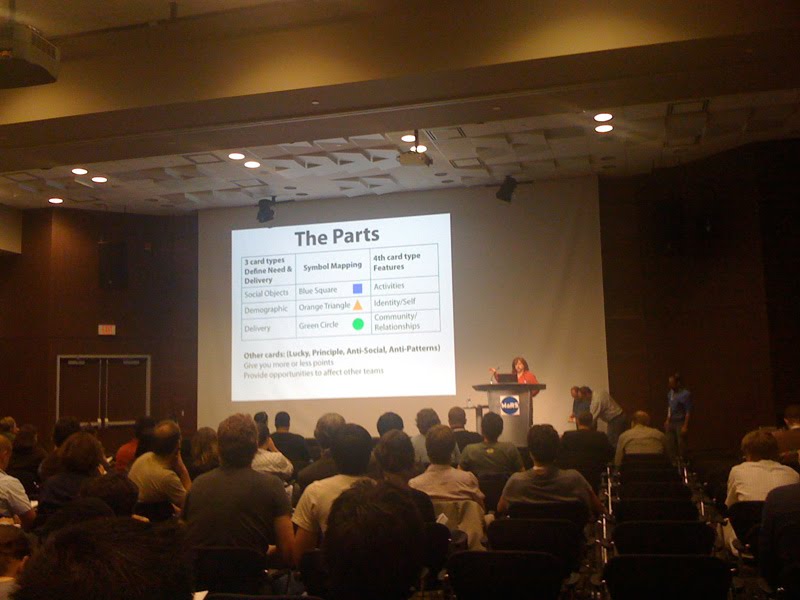
A presenter on stage at the Idea09 conference

IDEA2009 has come and gone and I’ve been reflecting upon my experience there. The event was well-organized and in a fine location in downtown Toronto (MaRS). There was a diverse set of presentations over the two days of the conference; it was mix of good and very good, with useful information nuggets in all. Highlights for me included Leisa Reichelt’s story of working with the Drupal open source community, Matthew Milan’s Innovation Parkour, Stephen Anderson’s take on Seductive Interactions, Christina Wodtke’s tour of great design ideas, and Mari Luangrath’s engaging tale of how she grew her business using Twitter.

Happily, the slide decks for the presentations are being made available online. I need to trawl through the Twitter feeds to find them!

UX Group of Waterloo Region kicks off new season

A new season of UX Group of Waterloo Region fun starts this Thursday, September 17 at 5:30pm at the Accelerator Centre. This first event, inspired by Scott Berkun, will be a design interactionary, an evening of hands on design fun in which teams take solving on design challenges in a ridiculously short amount of time. It promises to be good fun, and it’s a great opportunity to get to know other designers in our community and get to work with them.

Check out the details, and note the RRSP. Sadly, I’ll have to miss this great event myself due to immovable commitments elsewhere.

IDEA09 is practically here!

Boy, sometimes stuff just sneaks up on me!

I’ll be going to the IDEA2009 conference in Toronto next week. I’ve been registered for a while, and it was always on my radar, but it just felt like it was off over the horizon. Now it’s here and IDEA2009 should be a great event. My friend and Primal Fusion colleague Bob Barlow-Busch will be driving up together and and we’re looking forward to a stimulating couple of days of conversations, presentations, and general interaction design goodness.

Kudos to the organizers for putting together such an interesting program.

Next BarCampWaterloo is this Saturday

The next edition of BarCampWaterloo is coming up on Saturday September 12 at the Accelerator Centre in Waterloo. It runs from 11:00am to 5:00pm. There aren’t a lot of details available online right now, but have a look at what there is, and then sign up here. Demos are always interesting, and the conversations ought to be as well; there may well be food and drink as well.