How to find speakers for a conference

As some of you may know, I’m co-chair of Fluxible, a user experience event that’s coming to Waterloo Region in September. I thought it might be interesting to share some of the thinking and activities that go into organizing an event like this. For today, let’s start with the process of finding people to speak and lead workshops.

My co-chair Bob Barlow-Busch and I had some pretty simple criteria in our early stages of thinking about the event: we wanted to have fun; we wanted to learn something; we wanted to meet interesting people.

We had the good sense to ask for advice from Daniel Szuc, a supremely interesting person whom Bob has known for about 10 years. Daniel was generous with his time and thoughts, and shared some excellent advice based on his experiences running UX Hong Kong. That was an important and inspiring conversation for us.

We still weren’t certain what level of interest to expect from potential speakers, since Fluxible is a brand new event. But we had a few ideas and made some enquiries. Almost immediately, we discovered that interest was very strong. When I invited my former colleague James Wu, he accepted right away. Similarly, Bob’s former colleague Patrick Hofmann jumped right on board as well.

We were off to a great start. We thought about the kinds of things we wanted to learn and about our favorite speakers from other conferences, then started asking around more widely. At the same time, people started approaching us as word got around, and our newly-formed volunteer team brought some great suggestions to the table as well. Most of the potential speakers we invited agreed to participate, aside from a small number who were unable due to prior commitments. But everyone was encouraging and offered assistance of some sort. Pretty soon we realized that we’d gotten caught up in our own enthusiasm — and that we had more people on board than we had originally planned!

Admittedly, however, that was a delightful problem to solve.

As things stand now, we’ve announced eight speakers on Saturday, eight workshop offerings to choose from on Sunday, and a closing keynote speaker. We have designers, developers, and researchers from academia and industry, from global companies and from cutting edge boutique consultancies. These generous experts are delivering hands-on workshops, visionary talks, and plenty of inspiring moments in between.

And even with all that, there’s one final announcement still to come!

We’re thrilled with the program we’ve put together, as it’s an extraordinary group. We hope you agree.

Note: A sightly different version of this post originally appeared over at Fluxible. Thanks to Bob Barlow-Busch for the helpful edits.


A brief update on Fluxible

Logo: Fluxible - A User Experience Event

I mentioned Fluxible a few weeks back. Since then, we’ve been busy rounding up speakers and rounding out the Fluxible team.

Bob and I are thrilled with the speaker roster, and humbled that so many top user experience professionals have agreed to join us at our Fluxible event this year. As I write this, we’ve already announced six of them, and more announcements are coming shortly.

We’re also thrilled and humbled with the volunteers who have come on board to make this thing happen. An adventure of this size is beyond what the two of us could do on our own (despite our experience presenting monthly uxWaterloo meetings). Thanks to everyone for your faith and interest in Fluxible.

You can watch our ongoing progress via our Twitter account @Fluxible and at the Fluxible site.

Fluxible is coming to Waterloo

Logo: Fluxible - A User Experience Event

It’s a bit of a soft launch, but yesterday my friend Bob Barlow-Busch and I announced something that we’re planning for September 2012. It’s user experience event called Fluxible, and we’re pretty excited about it. As long-time organizers of uxWaterloo, Bob and I know that there’s a lot of great UX-related activity in our community and we want to introduce Waterloo Region to the rest of the UX world. We also want to bring some of the UX world here. As we put it on the currently-simple launch site:

Coming September 2012 to Waterloo Region: 2 fantastic days with some of the world’s top UX pros. Hone your skills at this fun and social event! Fluxible’s format mixes hands-on workshops with informative presentations, tours of leading global businesses, and plenty of chances to make new friends over great food and drinks.

We’re still working on details, of course, but we hope to reveal more in the coming weeks. Meanwhile, sign up to receive email updates about the event as we announce them, and follow Fluxible on Twitter. And, if you’re comfortable doing so, please share the news about Fluxible with anyone that you think might be interested.

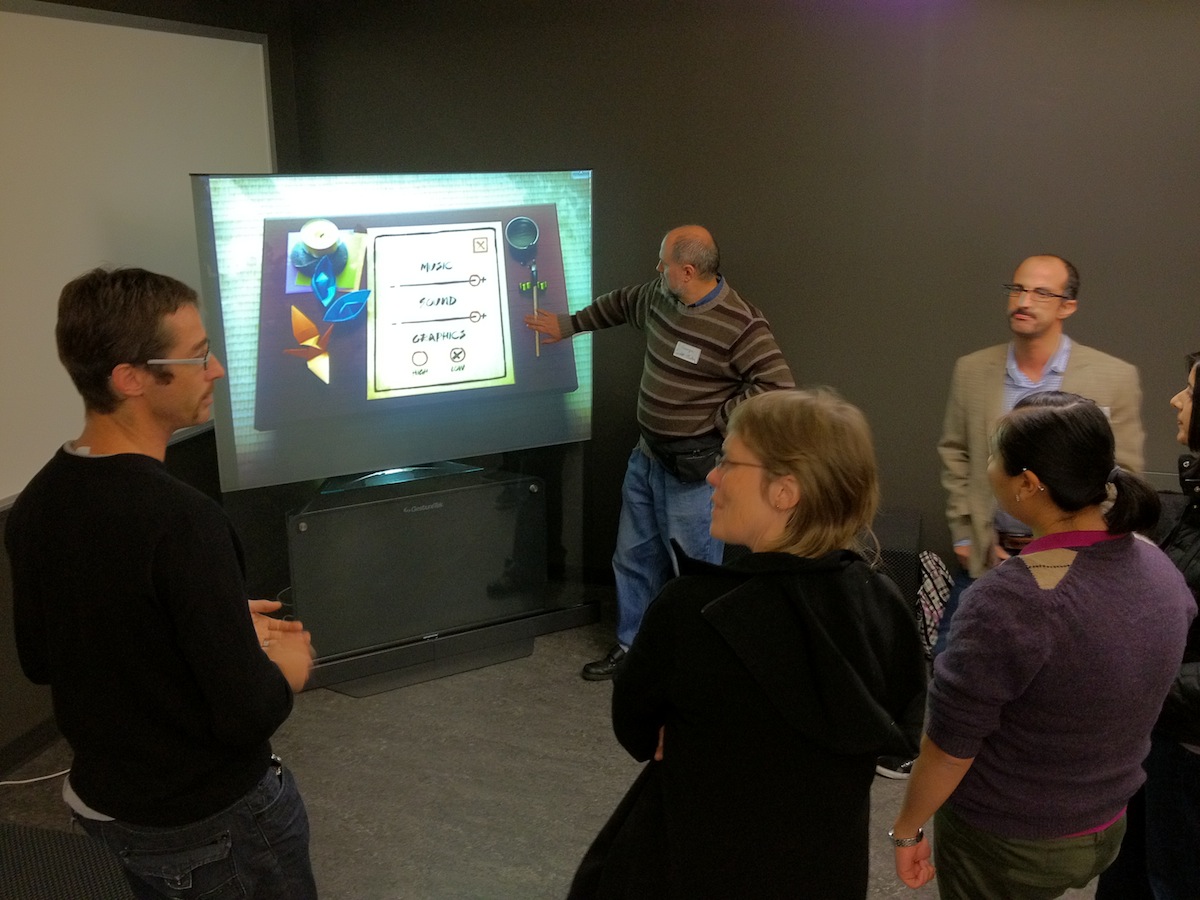
Serious play at Felt lab with uxWaterloo

A group of people looking at a screen at a uxWaterloo event at Felt Lab

We had a great uxWaterloo event at Felt lab yesterday, and Paul Goodwin and his student team from REAP were wonderful hosts. There were plenty of interactive display toys to play with, and lots of opportunity for “thinkering” with like-minded people who attended.

Darin White has a nice summary in the form of a photo essay over at his always interesting makebright place. We’ll have more at uxWaterloo soon, too.

Thanks to everyone for coming out and making the event a success.

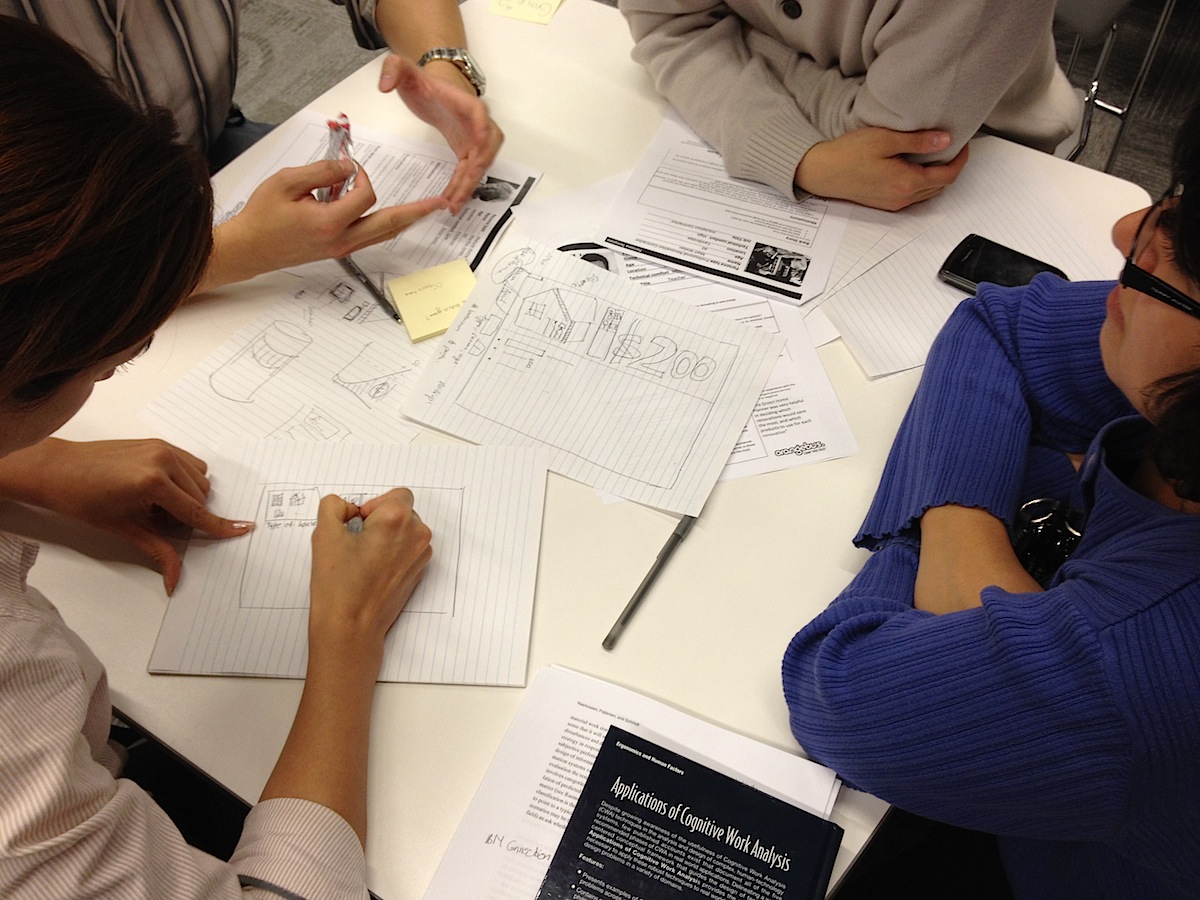
uxWaterloo design workshop with REEP

People sketching potential solutions for REEP at uxWaterloo event

Last Thursday the uxWaterloo meeting for October featured a new kind of activity. While we had done design workshops in the past, we had never previously had a design workshop focused on a real-world problem.

REEP Green Solutions, a Waterloo Region not-for-profit organization focused on the environment, is working on a web application that’s intended to help consumers understand the case for making upgrades to their homes that will increase energy efficiency. REEP approached uxWaterloo for help, and Thursday’s design workshop was the result.

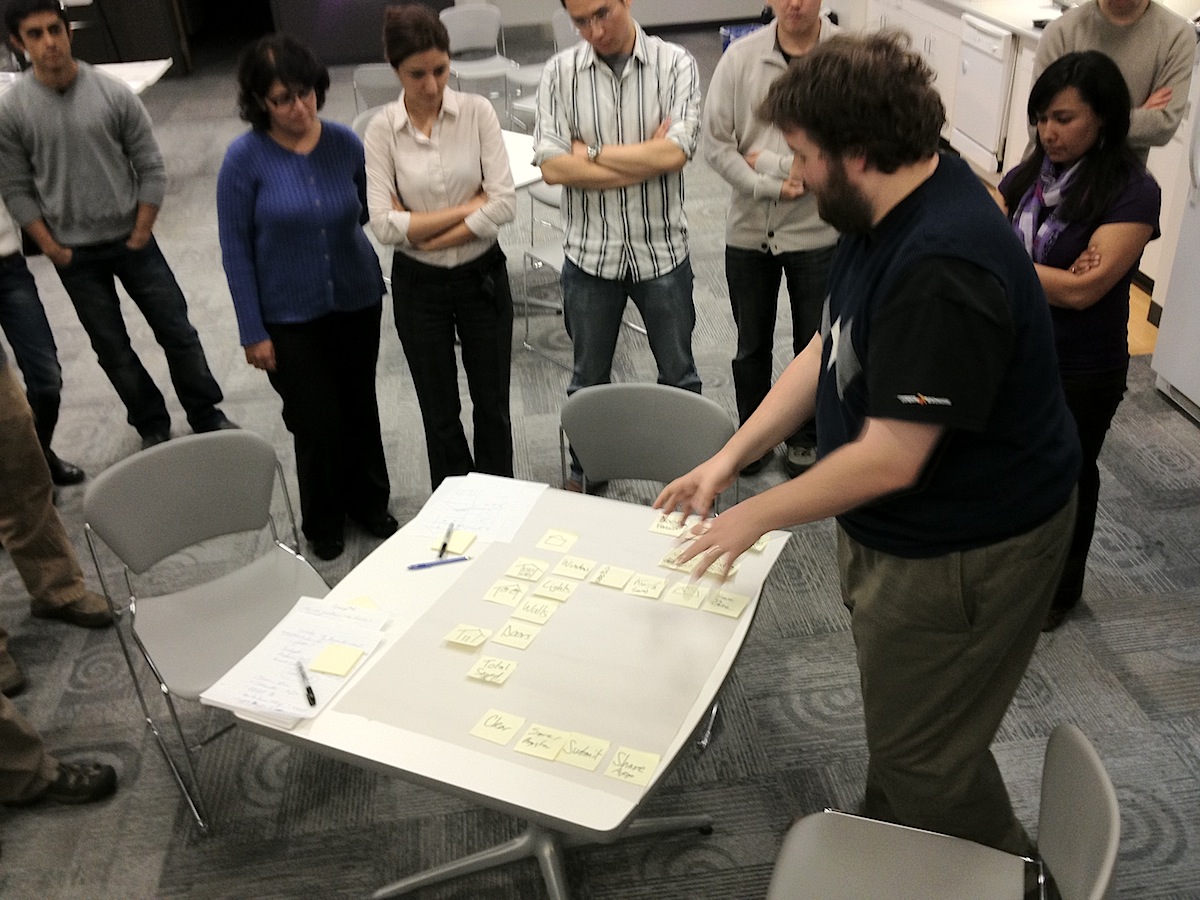
People surrounding a table covered with sticky notes

Working in small groups, workshop attendees brainstormed initial designs to deliver a compelling user experience for the application. REEP team members provided input, answered questions, and otherwise provided context for the design work. They had previously provided personas to work from, and a high-level functional description of their vision.

While the timeframe was ridiculously condensed — the meeting was only 90 minutes from start to finish — the workshop was a great success. Everyone seemed to have a great time, with many interesting ideas emerging from the action. The REEP team was excited by the ideas they saw and heard, and are already thinking about next steps.

March roars in like a lion

Last week was a bit of a blur as March roared in with the usual commitments at work keeping me busy and several extra-curricular activities added to the mix.

Wednesday started with Communitech’s Tech Leadership conference, an annual event that provided a great opportunity to meet people and engage in conversations. It also featured a pretty impressive lineup of speakers. I have to confess that Geoffrey Moore’s keynote presentation was a slight disappointment; while he’s a dynamic speaker, the material didn’t seem to add much in the way of new insights to what he has previously published. This particular crowd has to have been pretty familiar with the concepts of crossing the chasm.

The next session for me was with Scott Berkun, whose talk on the Myths of Innovation picked up on the theme of his book of the same name. I’ve heard Scott speak before and knew that I would enjoy his talk, and I did just that.

Following Scott’s talk, I travelled with him and my uxWaterloo conspirator Bob Barlow-Busch out to Quarry Integrated Communications in St. Jacobs, where Scott had agreed to do a special uxWaterloo lunch time talk. The theme was creative thinking hacks, and the format was completely open and driven by questions from the audience. It’s the same format that Scott used when he last spoke to the group, and it works well.

Wednesday evening was spent at Design Exchange Waterloo, where I acted as an industry panelist along with a couple of members of the local design community, Graham Whiting and Tammy teWinkel. The event featured enlightening presentations and lively conversations with many students. The hardest part was deciding which teams to give awards to, but after much deliberation we were able to arrive at decisions. The next event will likely be in the fall, and I’m looking forward to it.

Thursday was, of course, TEDxWaterloo. I hadn’t planned on attending, but some last minute schedule changes and the timely appearance of tickets changed that. As with last year’s inaugural event, it was a day of stimulating and inspiring presentations from some distinguished speakers. It was all terrific, but the most delightful surprise for me was Ben Grossman’s presentation on the hurdy gurdy, an ancient musical instrument with which Ben made some striking music while he was on stage. Moreover, between the two sets of talks, Ben provided wonderful background music that, for me, enhanced the many conversations that I had.

Sprinkled throughout the week were a few meetings with some of my fellow Ignite Waterloo organizers as we make plans for our next event. More news on that later.

Design Exchange 2011

It’s been a busy month, with the most recent Ignite Waterloo event and planning for uxWaterloo keeping me busy outside of my day job. I haven’t done a blog post here in a while, and I thought I’d start to catch up by letting you know about an event that I’m peripherally involved with.

Design Exchange Waterloo 2011 is a student-organized, design-focused forum that’s happening from 6:00pm to 9:00pm on Wednesday March 2 in room 2218 of the Tatham Center at the University of Waterloo. The DXW website is currently light on detail, but I can share a little more information that I know about. The coolest thing about this forum is that includes ten groups of students from four different areas (Faculty of Arts, Faculty of Engineering, Faculty of Environment, and School of Computer Science) presenting their design work. There also will be ample opportunity to discuss design, incubate ideas, and connect with a diverse group of students and industry professionals through their shared interest in design.

To that end, the organizers are hoping to see people from the off-campus community join the students for what looks to be a lively event. I can say from my own past experience that it’s well worth attending. At the last event, back in 2009, I even met a student whom we subsequently hired as an intern at Primal Fusion, an outcome that may have been unusual but which was more than welcome all around.

Here’s a my understanding of the agenda for March 2:

  • Introductions
  • 5 student presentations
  • 30 minute snack break (mingle period)
  • 5 student presentations
  • Awards for Best Presentations, Most Innovative Design
  • Concluding Statements

Should be an interesting event.

A fifth Ignite Waterloo is coming

Logo: Ignite Waterloo

I’ve been involved in organizing Ignite Waterloo, which produces a series of events in Waterloo Region, since the first event in 2009, and it’s been amazing to watch the events grow in popularity since that inauguration of the series. We now easily attract well over 200 people to these things, and, as I was telling someone last week, we have relied pretty much on word of mouth and social media to spread the news about our activities. Of course, there’s much more hard work than that to get an event off the ground — and there are many people who make it happen — but it’s been a big hit with audiences and speakers alike with very little traditional communications.

The next Ignite Waterloo event is scheduled for Tuesday February 8 at the Communitech Hub in Kitchener, and even though we only announced the date and venue on January 11, we’re already pretty much sold out. Still, try to get a ticket if you want one and see if you can get lucky.

A busy calendar for November

November features a full slate of local events that I’m looking forward to.

StartupCampWaterloo is, at this point, well-known in the technology community. I’ve always enjoyed attending the events, and have presented there in the past as well. At the tenth edition on Nov 10, Rick Stroobosscher and I will be talking about, and showing, what Karos Health is doing. As an aside, this is right in the middle of Entrepreneur Week, a yearly “innovation festival dedicated to entrepreneurial spirit”.

I’m particularly close to a couple of organizations that have three fine events coming up, and I’m going into carnival barker mode here!

uxWaterloo has not one, but two, events this month. The first, on November 16, is Lessons from designing at Google, a workshop presented by Adam Baker, a user interface designer at Google. Closer to home, we’re excited to have Joey Benedek speaking on November 24 about User Experience at Research in Motion. Both these visits have been in planning for some time, and we’re happy that the stars aligned to bring these exceptional speakers to the group. Register soon, as these have become two popular events.

Another group that I help organize is Ignite Waterloo. We’re putting on a fourth event on November 18. and are pretty excited about the talks that we have lined up. Be sure to get your tickets if you haven’t already, as tickets are moving fast.

Somewhat farther afield, in Guelph, the fifteenth edition of DemoCampGuelph is happening on November 17. It’s always a good time, as past posts here should indicate. Happily, I’ll be just sitting back and enjoying the talk and beer at this one!

Plenty to do!

Can I quote you on that?

Since hearing Trevor Herrle-Braun speak at the Communitech Community Managers peer-to-peer group, I’ve been thinking a little about how I use Twitter for messaging.

Like many people, I exchange tweets with friends and colleagues, and occasionally with people whom I know only through Twitter. Being busy with other things tends to limit these interactions for me, though, which reduces my engagement compared with someone like Trevor.

I tweet about events that I attend, including regular events like uxWaterloo and DemoCampGuelph as well as one-off events like the talk by Google’s Alfred Spector last spring. (I also write at this blog about these things, as it turns out.)

One of the staples of my own tweets has been quotations that are, at least for me, inspiring or insightful. In large part that’s a result of my own reaction to seeing great quotes tweeted others. Jim Estill, whom I met while working at Primal Fusion, has been a steady source of such quotes and I’ve often re-tweeted his. John Maeda is another great source for me, with many of his best quotes being his own excellent aphorisms.

The last few weeks I’ve experimented with a higher volume of these quotes. Some of them get re-tweeted by others, so it feels like a worthwhile thing to do.

I discovered, though, that managing my collection of quotes in a text file was getting a little unwieldy. This past weekend I set up a prototype repository to manage the quotes more effectively. I had a few simple requirements. For example, I want to know which quotes I’ve tweeted and when I tweeted them. I also want my quote repository to automatically format my quotes for use with Twitter; I set it up to format my tweetable quotes using real opening and closing quotation marks (like “this” and not like ‘this’) and a tilde character (~) separating the quote from its author.

So far the prototype seems like a good tool and has met its modest goals. As I use it I’ll iterate on the design and implementation and make changes that reflect my usage patterns. Being a designer, that’s about what you’d expect me to do, right?