Cyclists from around Waterloo Region are now testing Cycling Guide

A bicyclist's view looking down at a phone mounted on bike handlebars. The phone's screen shows a map with a marked route on it.

The Cycling Guide mobile app, which Zeitspace is creating with CycleWR, has reached a milestone. After an extended period of internal testing, we’ve put it in the hands of several people who are experienced and confident cyclists to see how well it works for them. But the app is actually aimed at people who aren’t experienced and confident cyclists. Why have we gone with these experienced and confident cyclists for early testing? It’s because we’re particularly interested in learning about the quality of the routes that Cycling Guide provides, and we want to start with people whose cycling experience and knowledge of cycling in Waterloo Region will better equip them to assess those routes.

Here’s a little bit of an overview of the routes. One of the things that we want Cycling Guide to do is provide low stress routes for people who otherwise may not feel confident or comfortable enough to ride in Waterloo Region. The routes that Cycling Guide presents on the map show cyclists what they can expect in terms of stressful (or not) car traffic when cycling along a route.  When creating a route, the app classifies streets and paths into four groups:

  • Good for anyone
    You’ll ride with few or no cars
  • Good for most cyclists
    You’ll ride in lighter car traffic
  • Good for confident cyclists
    You’ll ride closer to cars
  • Good for strong cyclists
    You’ll ride in heaver car traffic

The resulting Cycling Guide routes are often low stress, using protected cycling lanes, shared paths, and other car-free options. That is, Cycling Guide routes will typically favour the lowest stress paths and streets, the ones that are good for anyone. That’s great for less experienced cyclists.

Of course, this is what we intended. How close have we gotten to achieving this? So far the feedback is great. Here’s what some of our testers are saying:

  • “Passed through a park with construction on the trail which was not noted on the map. It was passable but looked like it had recently been closed.”
  • “Route did not suggest going directly down Doon South but rather to take a trail just after Winding Wood Cres. The trail had an intense, steep hill that would be challenging for most cyclists. Doon South at least is flat. Then lost the trail/route through a GVTA trail that was not appropriate for cyclists. Felt out of the way and not very direct.”
  • “I hit a dead end near a pond looking for this route, and couldn’t see it. I ended up getting back on Laurel Trail, to land near the top of this mystery segment, so I got back on track.”

And finally:

  • “I just want to emphasize I really love the problem this app is looking to solve.”

As the first three examples show, we have plenty of room to improve. But it’s great feedback as it all addresses exactly what we’re looking to learn about in our current testing phase: the quality of Cycling Guide routes. I also like the fourth piece of feedback, as it confirms that we’re going in the right direction!

Our work continues, and Cycling Guide improves every week.

If you’re interested in getting early access to Cycling Guide yourself, sign up right now at CyclingGuide.app. We’d love to hear from you.

This post originally appeared on the Zeitspace blog.

Cycling Guide and the joy of exploring Waterloo Region by bicycle

A bicyclist's view looking down at a phone mounted on bike handlebars. The phone's screen shows a map with a marked route on it.

I want to provide an update on Cycling Guide, the mobile app that Zeitspace is working with CycleWR to create. One of the fun aspects of working on Cycling Guide has been something that software product teams don’t always enjoy: testing

More specifically, as the team has worked on the app we’ve needed to assess the quality of the cycling routes that it provides. As a bit of background, we’re building Cycling Guide on a foundation of geospatial data from OpenStreetMap. It’s a fantastically detailed and accurate resource. We’ve been able to process the underlying OSM data that we use to better understand and visualize our routes, which has been a great starting point for our routing approach. But we’re also doing exploratory testing of our cycling routes, something familiar to software product teams.

In our case, it started by looking at the routes on screen. As Cycling Guide is  focussed on Waterloo Region, we’re assessing routes on streets that we know at least a little. As work progressed we could easily identify anomalies in the routes we looked at and address them in development. We also defined some specific trips that we could review again and again, looking to see how updates to data or our routing engine affected the routes. For example, there’s a two-way protected cycling lane along the otherwise one-way Erb St between Peppler and Caroline in Waterloo that we’d expect to see used for some routes in either direction. And we have a few test trips where we would reasonably expect that routes would use the Iron Horse TrailSpur Line Trail, or Laurel Trail. My own favourite test trips are to local breweries. 

In addition to software updates and data updates, being able to tweak routing settings while testing and seeing the results on a familiar street and path network has made the work a lot of fun. We’ve also compared our routes to what some other mobile mapping apps provide, and the results are encouraging. In many cases we prefer the routes that Cycling Guide provides.

Exploratory testing on screen was a place to start and helped the team make great progress. Things got more fun when we started doing exploratory testing while on bikes in the real world. The earliest field testing that our team did was pretty simple, as the app was extremely limited in functionality. For example, riding along Iron Horse Trail and periodically checking the current location marker on a map wasn’t really delivering much value, but the functionality worked. As Cycling Guide grew in capability I started trying more ambitious rides myself. Two recent cycling trips provided unexpectedly strong validation that the app is already delivering value.

The first was a ride with my son from Uptown Waterloo to St. Jacobs and back. The route took us on paths that we didn’t know about, or hadn’t been able to find previously. And the app was great to use while riding even in a still-limited form. The second was a ride I did from Uptown Waterloo to Cambridge and back. Again, Cycling Guide took me on paths that were new to me. Both rides were mostly on protected lanes or shared paths that were clear of cars. And both rides were quite scenic in places. The rides were unexpectedly exhilarating experiences. My typical rides are either running errands or longer recreational rides. Having a way to expand my cycling repertoire will provide great value for me.

As I like to cycle anyway, this exploratory testing phase has been great fun. In addition to testing our app, it has me exploring Waterloo Region by bicycle and making new discoveries. Even at this early stage we’ve been able to make some small improvements in OpenStreetMaps data as well. So it’s been a win on multiple levels.  Sometime soon we’ll be expanding our testing to include some outside testers who aren’t a part of the project team. We’re excited to see the results.

This post originally appeared on the Zeitspace blog.

I’ve overhauled and upgraded my blog

A blog post on a laptop compute screen

Since 2009, this personal blog of mine has run on Blogger, a platform owned by Google. Over the years, it had become obvious that Blogger wasn’t a priority for the folks in Mountain View. Concerned about the inevitability of the platform being shut down I decided to migrate away from it. I considered multiple options and landed on WordPress, which I was already familiar with and which is open source. (WordPress is also a company that offers paid services such as hosting, and also supports the open source software.)

Migration of the blog turned out to be a bigger task than I had thought for a variety of reasons. There were many issues that I needed to deal with and, having started the migration and overhaul in 2019, it took until now to complete.

There were hundreds of broken or redirected links to address. It’s not that surprising that decade-old links to event registration pages were gone, but discovering articles that were only a few years old have vanished was unexpected. It felt like I was doing a restoration, always making decisions about how to handle each broken link. Many I simply removed. For others I found new links to use instead.

The biggest issue was discovering multiple eras of questionable Blogger HTML to sanitize. Plentiful nested DIV elements were only a small part of that mess. In the end, the posts are stripped down and clean, ready for new eyes to read them (and new web browsers to interpret the HTML).

I also spent time refurbishing the images. Many of them had originally been posted in smaller sizes than today’s web users might expect. As most photos were my own, I went back to the originals in many cases and added upgraded versions to the blog.

Happily, I had always run the blog on my own domain name, though Blogger-style URLs needed to be updated with WordPress URLs and appropriate re-directs. That was relatively easy compared with other work.

Finally, I added a few pieces that I had neglected to cross-post over the last few years. They had been written originally for the Zeitspace blog or the Fluxible blog. Collecting them together here makes for a more representative picture of what I’ve been up to.

I’m sure there will be issues that emerge that I’ve missed, and there are things that I’m still working on in the background. But it feels good to have this done.

Fluxible Benefit Concert was a great success

Kathryn Ladano performing on bass clarinet

Last week’s Fluxible Benefit Concert for Open Ears And NUMUS was a great artistic success, featuring performances by musicians in our own Waterloo Region, but also from outside the region. 

And even better, the financial outcome of the concert was also a great success. With ticket sales and matching dollars from Fluxible and Fluxible TV sponsor ZeitspaceOpen Ears and NUMUS are splitting $5,610. At a time when they can no longer deliver live music experiences in person, we know that this will have an impact. 

Nobody knows when either organization will be able to present live music experiences again. But I know that the musicians they present bring artistry and a devotion to their craft and that the result is great musical experiences in our community. 

Finally, Open Ears and NUMUS have a joint Indiegogo campaign going on — check it out.

This post originally appeared on the Fluxible website.

Fluxible TV is off the air

Well, Fluxible TV has finished broadcasting, and the reviews are in. It was a great success!

Big thanks to our main speakers, who each delivered thoughtful insights during their presentations.

And thanks as well to the other alumni speakers to delivered wonderful pre-recorded segments for the broadcast. We’ll write more about them very soon.

And big thanks to our sponsors, whose ongoing support and enthusiasm is so crucial to delivering an event like this.

We’re reflecting on our first online event, and thinking about lessons learned that will inform Fluxible 2021, whether it’s in-person or online. But we’ll be back next year.

Oh, and how do we know that Fluxible TV was a success? We sent out a survey to our attendees. Here are some of the comments we’ve received from them:

  • “It was a Zoom call that didn’t feel like one — it felt like a wonderfully balanced, evenly paced, sequence of stories/insights with nice interludes and cameos from the UX community. Loved the classic old timer television broadcast metaphor!”
  • “It’s a great way to listen to experts talk about their ideas and approaches, and be able to use those ideas in your own projects.”
  • “Many conferences have interesting, insightful speakers and participants. But the energy of Fluxible is intimate, and sincere. It just feels different. It embodies the fun of thinking together, prompted by the presentations. (I guess the Slack channel helped that.)”
  • “It was a phenomenal, energizing, and well-run event that left me feeling recharged and satisfied!”
  • “A women-led panel of incredible minds in different sectors showing the power of UX in all aspects of life.”
  • “What stands out, though, was the range of content, yet their threads magically overlapped. I also really liked the resources that were posted that were related to the speaker. I hope your slack stays available as a resource.
  • “All of the speakers were equally provocative and informative. I especially enjoyed the way in which you separated each talk by shorter segments and unique musical entertainment.”
  • “Also want to mention that I sincerely appreciate the diversity of the ethnicity of speakers. It’s not an easy task but Fluxible TV did a great job.”

See you all next year, and thanks again.

This post originally appeared on the Fluxible website.

Zeitspace is supporting Open Ears and NUMUS

Richard Burrows plays a vibraphone and Kathryn Ladano plays a bass clarinet

Zeitspace is proud to call Waterloo Region home. It has a vibrant tech ecosystem that makes the region a natural home for a company like ours. It also has a vibrant creative community that makes the region a wonderful place to live.

Zeitspace has been a sponsor of Open Ears Festival of Music and Sound in the past. This year would have been no different. But then it was different, as this year’s edition of Open Ears was cancelled. And other community events that we care about were either cancelled outright, or pivoted to online versions.

As I wrote back in 2018 when Zeitspace first sponsored Open Ears:

In past years, Open Ears has been somewhat associated with Fluxible, which I co-chair, and where various Open Ears associated musicians have delivered wonderful musical performances as a part of the Fluxible Conference program. (That’s a relationship that will continue this year, by the way, with more details to come.) As well, I’ve been on the board of directors for Open Ears for several years now, doing what I can to support an organization whose mission and activities are meaningful for me.

And, of course, there are many other arts organizations in the region. For example, NUMUS Concerts, like Open Ears, has a long history presenting music in innovative and unexpected ways. And also like Open Ears, many NUMUS-associated musicians have performed at Fluxible.

Fluxible is presenting a concert as a part of Fluxible TV, a streaming event that’s happening on June 4. But in addition Fluxible is streaming the concert separately as the Benefit Concert for Open Ears and NUMUS, expressly to financially support the two wonderful music organizations. And Fluxible is matching dollar-for-dollar ticket sales to make the support even more special.

And in that same spirit of support we’ve decided that Zeitspace will match dollar-for-dollar tickets sales for this benefit concert. Your ticket-buying dollars of support for Open Ears and NUMUS will now go even further.

So if you’re interested, please go buy a ticket now. You’ll enjoy a great concert while supporting two great music organizations.

And if not these organizations or this event, please look for other ways to support the creative community in Waterloo Region (or in your own community, wherever that is). The current focus has to be on survival, but let’s also be thinking about how we can all recover and thrive in a COVID-19 world.

This post originally appeared on the Zeitspace blog.

Announcing the Fluxible Benefit Concert for Open Ears and NUMUS

Fluxible Benefit Concert for Open Ears and NUMUS

We’ve already revealed Fluxible TV to the world. It’s streaming to screens everywhere on June 4.

Today we have a related streaming event to announce. 

The Fluxible Benefit Concert for Open Ears + NUMUS is also happening on June 4 at the end of the Fluxible TV broadcast. That is, anyone watching Fluxible TV will be able to watch these awesome performances from exceptional musicians, all in support of Open Ears Festival of Music and Sound, and NUMUS Concerts. Many musicians affiliated with these organizations have performed at Fluxible over the years, and we’re lucky to have them in our community.

But not every music fan cares about Fluxible and UX. We do understand that! 

So we’re making the Fluxible Benefit Concert for Open Ears + NUMUS  available separately. And we’re doing it using pay-what-you-can pricing, to make it as accessible possible.The intent is to raise money for these two wonderful organizations that have been sharing innovative and inspiring sounds and music in Waterloo Region for decades. If you can pay more, that’s great for Open Ears and NUMUS. If you can pay less, that’s OK too. Both organizations want to reach as many people as possible with their music.

And there’s one more thing. Fluxible will match every dollar raised through ticket sales for the benefit concert. So the benefit gets even better because every dollar you spend goes twice as far!

Get your tickets now and enjoy some great music. See you next week.

This post originally appeared on the Fluxible website.

Fluxible TV streams to screens everywhere on June 4

FTV Logo

Back on March 10 we announced that Fluxible 2020 was cancelled. Obviously it wasn’t an announcement that we were happy to make, and just as obviously it was the announcement that we had to make. Today we have much happier news to share with you. 

Fluxible TV will be streaming to screens everywhere on June 4, 2020.

We’re still finalizing details, and will have more to announce soon. Right now, though, we can tell you that we have the bulk of the program in place. Featuring presentations from trusted UX experts, musical interludes, and some special surprises, Fluxible TV has us excited and we hope you will be too.

Oh, and one more thing:

We’re thrilled that tickets for Fluxible TV are just $25.

Finally, we’ve set up a new Fluxible TV website to share all the details.Check it out, and then get your tickets.

This post originally appeared on the Fluxible website.

Fluxible 2020 has been cancelled

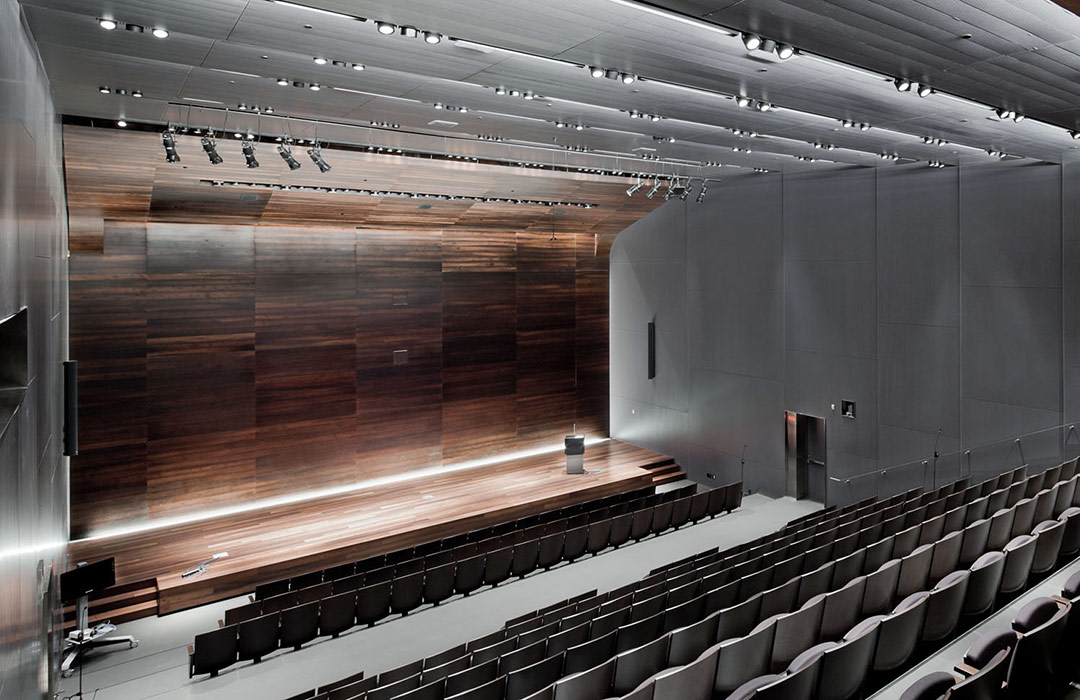
A view of an empty stage in an empty auditorium

COVID-19 is obviously all over the news and on the minds of people around the world. It’s a global health crisis that has touched many people directly or indirectly. The world of conferences has been hit by big changes for 2020, with multiple high-profile events having cancelled, postponed, or changed their format to digital-only.

Like other conference organizers we’ve given the situation much careful thought. Our 2020 edition is less than three months away. Having a safe environment for our conference, workshops, and meetups is most important to us. But we’re not confident that, given the uncertainty and increasing health risks, we’re able to provide that.

We’ve decided that we need to cancel Fluxible 2020.

Obviously we’re not happy to take this route, but the health of our community is of primary importance. Under the circumstances it’s the right thing to do.

We’ll be issuing full refunds to everyone who purchased a ticket to Fluxible Conference or a Fluxible Workshop. We hope you understand and hope to see you at the next edition of Fluxible.

This post originally appeared on the Fluxible website.

The Fluxible Schedule web app is back for 2019

A hand holding a mobile phone that shows a schedule for Fluxible

The whole Zeitspace team is excited about Fluxible starting this week. Many of us will be attending some combination of Fluxible Meetups, Fluxible Workshops, and Fluxible Conference. And we’ll be using the Fluxible Schedule web app to stay on top of Canada’s UX Festival again this year!

Zeitspace created Fluxible Schedule for the 2018 edition of Fluxible. And it was such a nice resource that we’ve updated it with a more robust content management system behind the scenes to support all the great events at Fluxible. As it did last year, Fluxible Schedule does one simple thing: it keeps attendees informed about what’s happening each day.

We’ll have more to say about Fluxible in the coming days here in The Zeitspace Blog. Until then, do check out Fluxible Schedule if you’re at Fluxible (or even if you’re not). And consider attending Fluxible if you haven’t already. We think it’s a great experience.

This post originally appeared on the Zeitspace blog.